Technical Guides
- Prepared by
- CANEL Elektrik
- Published
- Reading time
- 2 min
A site acceptance guide to meter identity, timestamps and measurement consistency after power meter installation.
When an industrial panel-level energy monitoring system goes live, a reading on the screen is a starting point. To compare production lines, demonstrate that each value comes from the intended panel, covers the same time interval and remains consistent during normal operation. These checks link the electrical contractor’s installation scope to the controls team’s data handover.
Match the meter to the panel and circuit
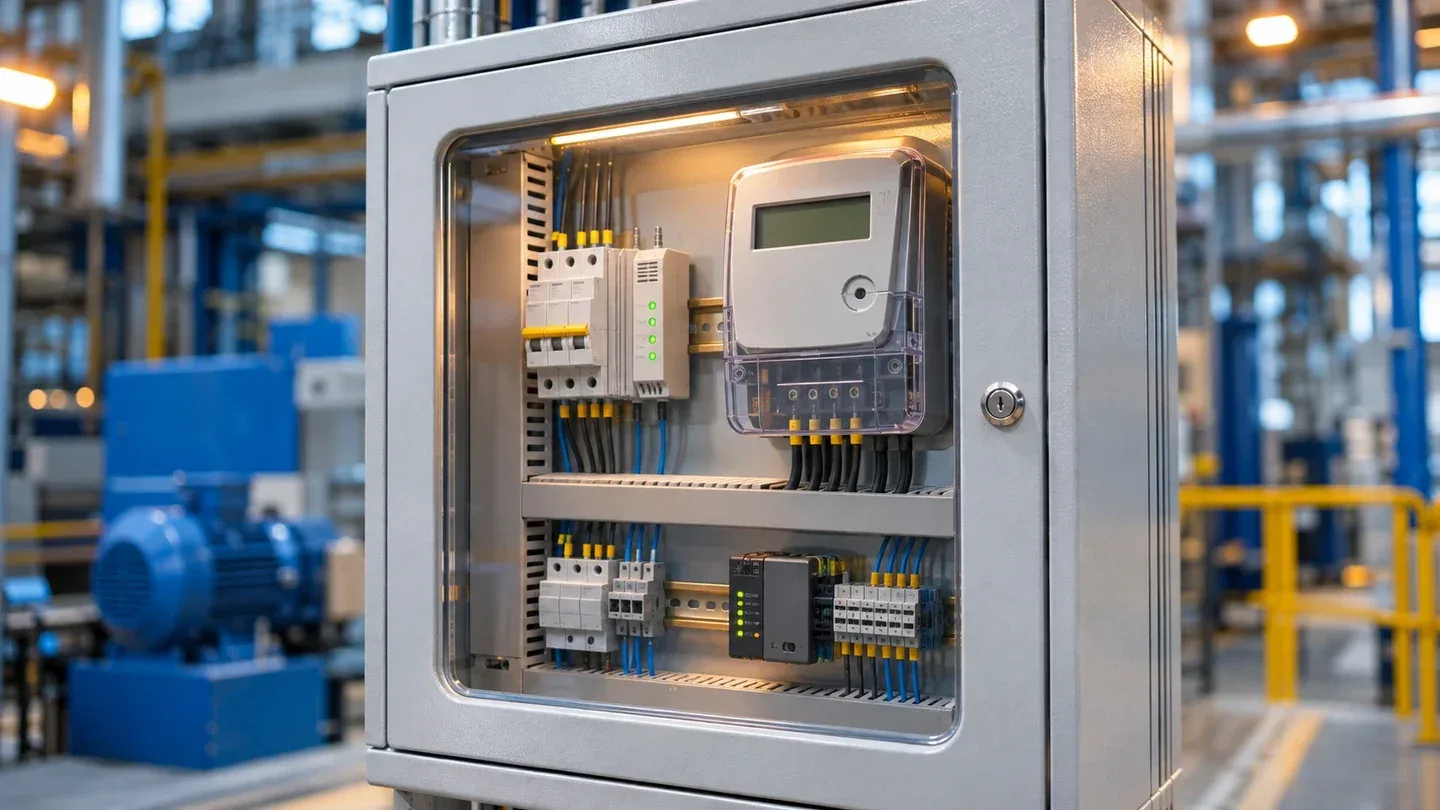
For each point, record the panel and feeder label, meter address, current transformer ratio, measurement and engineering unit. Regardless of the communications protocol, the field display and central platform should identify the same point. Establish how a replacement meter will be tied to historical trends. The US General Services Administration’s submetering guide provides examples of monitoring by panel and circuit group.
Set rules for timestamps and missing readings
Define the sampling interval, time zone and behaviour when readings are unavailable. Recording a lost connection as zero consumption can distort a shift report. Use separate flags for missing readings, late readings and genuine zero consumption. When reconciling an upstream meter with feeder totals, account for unmetered loads, sampling intervals and double counting.
Ask for traceable acceptance evidence
Choose a representative production period and compare the field meter, central records and shift report. Start by tracing one sample point through its identifier, timestamp and units. Include the way communications interruptions are flagged in the handover pack. Our panel energy monitoring tender and acceptance guide covers package responsibilities. See CANEL’s electrical services for the supporting electrical infrastructure.